Vehicle graphics are visual designs applied directly to a vehicle’s surface, used to advertise a business, personalize a fleet, or promote a brand on the move. They range from simple door decals to full vehicle wraps covering every inch of a van, truck, or car.
Key Takeaways
- Vehicle graphics can be partial decals, full wraps, or magnetic signs, each with different costs and lifespans.
- A well-designed wrap on a single vehicle can generate 30,000 to 70,000 impressions per day in a busy U.S. city.
- The average full vehicle wrap costs between $2,500 and $5,000, while partial wraps start around $500.
- Material quality, surface preparation, and professional installation all directly affect how long your graphics last.
- Vehicle graphics are fully removable without damaging factory paint when installed and removed correctly.
- A clear brand message, high-contrast colors, and large contact details are the three most important design principles.
Why Vehicle Graphics Are One of the Most Cost-Effective Forms of Advertising
Traditional advertising channels require recurring payments. A billboard rental in a major U.S. city can run anywhere from $1,500 to $30,000 per month. A 30-second TV spot on local cable still costs hundreds of dollars per airing. Vehicle graphics, by contrast, are a one-time investment that continues working for years without an ongoing fee.
The Outdoor Advertising Association of America has documented that mobile advertising reaches more consumers at a lower cost per thousand impressions than any other form of outdoor media. For small business owners operating in competitive local markets, that math is hard to argue with. A plumber in Dallas, a landscaping company in Phoenix, or an HVAC technician in Atlanta can all benefit from turning their work vehicles into rolling advertisements that are seen in neighborhoods where their ideal customers actually live.
Beyond cost, there is a trust factor. A professionally branded vehicle signals that a business is legitimate and established. Studies conducted by the American Trucking Associations have found that consumers are more likely to call a company whose vehicle they have seen repeatedly in their area. Repetition builds recognition, and recognition builds trust.
The Different Types of Vehicle Graphics and What Sets Them Apart
Not every business needs the same solution. Understanding the differences between the main options helps you invest wisely.
Full Vehicle Wraps
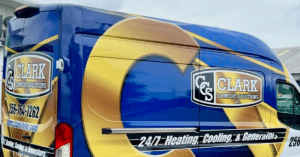
A full wrap covers the entire exterior of a vehicle, including the hood, roof, doors, bumpers, and sometimes the windows. This creates the most dramatic visual impact and gives you the largest canvas for your brand. Full wraps typically last between five and seven years when applied with premium cast vinyl and properly maintained.
Partial Wraps
Partial wraps cover a portion of the vehicle, often the sides or the rear. They are significantly more affordable than full wraps and still deliver strong brand visibility. Many small businesses use a partial wrap on the doors and rear combined with simple lettering on the hood to get strong coverage without the full wrap price tag.
Cut Vinyl Lettering and Decals
Cut vinyl is the most budget-friendly option. Letters, logos, and simple shapes are cut from a solid-colored vinyl sheet and applied directly to the paint. This works well for fleets where consistent, clean branding is the goal without complex graphics. Vinyl lettering typically lasts three to five years outdoors before fading or peeling becomes noticeable.
Magnetic Signs
Magnetic panels attach to a vehicle’s metal surface and can be removed and repositioned. They are popular with sole proprietors who use a personal vehicle for both work and personal driving. The trade-off is that magnets do not conform to contours as smoothly as adhesive vinyl, and they can trap dirt or moisture underneath if not maintained carefully.
| Type | Average Cost | Lifespan | Best For |
|---|---|---|---|
| Full Wrap | $2,500 – $5,000+ | 5-7 years | Maximum brand impact, fleets |
| Partial Wrap | $500 – $2,500 | 4-6 years | Mid-budget branding |
| Cut Vinyl Lettering | $100 – $500 | 3-5 years | Simple, clean identification |
| Magnetic Signs | $75 – $300 | 2-3 years | Personal vehicles, flexibility |
| Perforated Window Film | $200 – $800 | 3-5 years | Rear window advertising |
How Vehicle Graphics Are Designed, Produced, and Installed
The process from concept to finished vehicle involves several distinct phases, and each one matters for the final result.
Design
Good design is where most vehicle graphics either succeed or fail. The goal is not to cram every piece of business information onto the vehicle. Effective wraps lead with one clear message, use a maximum of two or three colors that contrast sharply against each other, and display a phone number or website in a size legible from 50 feet away. Serif fonts and thin script typefaces are difficult to read at highway speeds. Bold, sans-serif fonts consistently outperform decorative alternatives in real-world readability tests.
Working with an experienced provider makes a measurable difference here. If you are ready to move forward, exploring vehicle graphics through a professional service ensures your design is optimized for the specific dimensions of your vehicle rather than a generic template.
Material Selection
The two primary vinyl categories are cast vinyl and calendered vinyl. Cast vinyl is thinner, more conformable, and more resistant to shrinking over time. It is the correct choice for full wraps, especially on vehicles with curves, rivets, or complex body lines. Calendered vinyl is stiffer and less expensive, making it suitable for flat surfaces and short-term applications. Top-tier brands in the U.S. market include 3M, Avery Dennison, and Oracal, all of which offer warranties on their commercial-grade products.
Surface Preparation and Installation
This step is the most underestimated part of the process. The vehicle surface must be completely clean and free of wax, grease, and contaminants before any vinyl is applied. Installers typically clean with isopropyl alcohol and work in a temperature-controlled environment, ideally between 60°F and 80°F. Vinyl applied to a cold or wet surface will fail prematurely regardless of material quality.
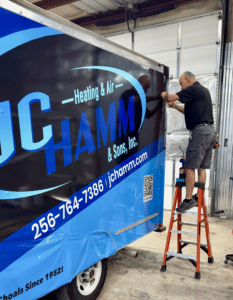
Professional installation involves heat guns or torches to activate the vinyl’s adhesive and conform it around curves and edges. Air bubbles are worked out with squeegees. Seams are placed in low-visibility areas where possible. A properly installed wrap, left to cure for 24 to 48 hours before washing, will adhere correctly and resist lifting at the edges.
Things to Know
- Sun exposure accelerates fading. Vehicles parked outdoors daily in high-UV states like Florida, Arizona, or Texas will see shorter graphic lifespans unless UV-resistant laminate is applied over the print.
- Paint condition matters before you wrap. Peeling paint, rust, or deep scratches underneath a wrap will cause the vinyl to fail and could make removal more difficult.
- Wraps actually protect your factory paint. The vinyl acts as a physical barrier against minor scratches, rock chips, and UV degradation on the covered panels.
- Not all printers produce the same quality. Eco-solvent and latex printers are the industry standard for durable outdoor graphics. Inkjet prints without proper laminate will fade within months outdoors.
- Removal requires professional care. Heat guns are used to loosen the adhesive, and residue is cleaned with adhesive remover. DIY removal on a cold day is the most common cause of paint damage.
- Fleet consistency requires a color management system. If you operate multiple vehicles, make sure your provider uses calibrated printing to keep brand colors consistent across all units.
Fleet Branding: Scaling Vehicle Graphics Across Multiple Vehicles
For businesses operating more than three vehicles, fleet branding becomes a strategic exercise rather than a simple purchase. Consistency across a fleet signals professionalism at scale. A pest control company with 20 uniformly branded trucks creates a far stronger local impression than a fleet where every truck looks slightly different.
When managing fleet graphics, working with a single provider who can maintain color and design consistency is essential. Document your exact brand colors in both Pantone and CMYK values before ordering. This ensures that whether you are replacing graphics on one vehicle or adding five new units to the fleet, every truck looks identical.
Fleet programs also offer volume pricing advantages. Many providers offer tiered discounts starting at three to five vehicles, which can reduce per-vehicle costs by 15 to 25 percent compared to individual orders.
Maintaining Your Graphics So They Last the Full Lifespan
The way you care for a wrapped vehicle directly affects how long the graphics stay sharp and vibrant.
Washing Guidelines
- Hand washing with a soft cloth and mild automotive soap is the safest method.
- Avoid automated car washes with spinning brushes, which can lift edges and cause micro-tears.
- Touchless car washes are acceptable but should be used at lower pressure settings.
- Never use pressure washers at close range or at angles less than 90 degrees to the surface.
Storage and Environmental Exposure
Parking in a covered garage significantly extends graphic life. If covered parking is not available, parking in shade reduces UV exposure. In northern states, road salt and ice-melt chemicals should be rinsed off promptly, as prolonged contact degrades the vinyl adhesive over time.
Spot Repairs
If a section of your wrap is damaged by a collision or vandalism, most professional providers can print and install a matching replacement panel without redoing the entire vehicle. Keep the original design file and specify the material used so the replacement matches as closely as possible.
Frequently Asked Questions
Q: How long do vehicle graphics typically last?
The lifespan of vehicle graphics depends on the material and environmental conditions, but most quality wraps last between five and seven years.
Cast vinyl from reputable brands like 3M or Avery Dennison, when properly installed and maintained, holds up well in most U.S. climates. Vehicles in high-UV environments like southern states may see slightly shorter lifespans without UV-protective laminate.
Q: Will vehicle graphics damage my car’s paint?
When installed and removed correctly, vehicle graphics do not damage factory paint and in many cases protect it.
The vinyl acts as a physical barrier against minor abrasion and UV exposure. Damage typically occurs only when vinyl is removed improperly, such as peeling it off cold or using sharp tools on the paint surface.
Q: How much does a full vehicle wrap cost in the U.S.?
A full vehicle wrap in the U.S. typically costs between $2,500 and $5,000 for a standard car or van, with larger trucks running higher.
The final price depends on vehicle size, design complexity, material quality, and the installer’s labor rate. Partial wraps and vinyl lettering are substantially more affordable starting options.
Q: Can I design my own vehicle graphics?
You can submit your own artwork, but it must meet specific technical requirements including resolution, color mode, and bleed dimensions.
Most professional providers accept design files in Adobe Illustrator or PDF format at 300 DPI. Working with a designer who understands vehicle template files and sight-line visibility will produce a more effective result than a generic design.
Q: Are vehicle graphics tax deductible for businesses?
Yes, vehicle graphics used for business advertising are generally tax deductible as a business advertising expense under IRS guidelines.
You should consult a CPA or tax professional to confirm how this applies to your specific situation, particularly if the vehicle is used for both personal and business purposes. The IRS requires that the expense be ordinary and necessary for your business.
The Bottom Line on Vehicle Graphics
Vehicle graphics remain one of the most efficient advertising investments available to U.S. small businesses and fleet operators. A single wrapped van reaching tens of thousands of people daily at no recurring cost is a straightforward value proposition that most traditional advertising channels simply cannot match.
Whether you are starting with basic vinyl lettering on a service truck or rolling out a full fleet wrap program across 20 vehicles, the principles are the same: invest in quality materials, work with experienced designers and installers, and maintain your graphics consistently. The return compounds every mile your vehicle travels.
Your next step is to get a professional assessment of your vehicle and brand goals. Reach out to a qualified provider, share your logo and brand colors, and ask to see template mockups before committing. The right partner will show you exactly what your vehicle will look like before a single piece of vinyl is ordered.