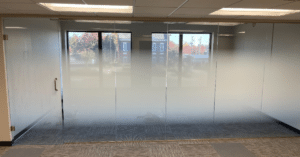

When it comes to managing light, heat, and privacy in a commercial space, window tinting and blinds both offer real solutions, but they serve different needs in very different ways. Understanding the trade-offs between these two options helps you make a smarter investment for your building and your team.
Key Takeaways
- Window tinting offers long-term energy savings by reducing solar heat gain and blocking UV rays without obstructing views.
- Blinds provide flexible, adjustable light control but require regular cleaning, mechanical upkeep, and eventual replacement.
- Tinting typically has a higher upfront cost than basic blinds, but the return on investment through reduced utility bills is significant over time.
- Commercial tinting improves glare reduction permanently, while blinds must be manually adjusted throughout the day.
- For businesses focused on aesthetics and brand image, tinting delivers a cleaner, more professional exterior appearance.
- Hybrid approaches, using tinting on large facade windows and blinds in private meeting rooms, can offer the best of both solutions.
Why Your Window Solution Matters More Than You Think
The windows in your commercial building are doing far more than framing a view. They affect how comfortable your employees feel, how much you spend on cooling and heating, how clients perceive your brand from the outside, and how well your team can focus without glare bouncing off their screens. A poor choice in window management can quietly cost your business thousands of dollars per year in lost productivity and inflated energy bills.
Both window tinting and blinds have legitimate places in commercial design. The decision comes down to your building type, your budget structure, and what you’re actually trying to solve. Are you dealing with relentless afternoon sun fading your merchandise? Or do you need flexible, room-by-room privacy control for a law firm or medical office? The answer to those questions drives everything.
How Commercial Window Tinting Works
Commercial window tinting involves applying a thin polyester film directly to the interior surface of your existing glass. These films are engineered to filter specific wavelengths of light. Depending on the film type, they can block solar heat, reduce UV radiation by up to 99%, cut glare significantly, and even add a layer of shatter resistance to glass in the event of breakage.
There are several film categories available for commercial applications:
- Solar control films reduce heat gain and lower HVAC demand.
- Security films hold glass together if a window breaks, reducing injury risk.
- Decorative films add frosted or patterned appearances for privacy and branding.
- Low-emissivity (Low-E) films improve insulation performance in climates with both hot summers and cold winters.
For businesses operating in large buildings with significant glass exposure, commercial window tinting office buildings is a well-established solution that addresses multiple performance issues simultaneously. One installation handles heat, glare, UV exposure, and aesthetics in a single step.
The installation process is relatively fast. A professional crew can typically film an average-sized commercial floor in one to two days, and the film is nearly invisible after application. There’s no daily operation required from your staff, and the film continues performing for 10 to 15 years before needing replacement.
How Blinds Work in a Commercial Setting
Blinds, whether vertical, horizontal, roller, or cellular, are mechanical window coverings that let occupants manually control light and privacy on demand. They’ve been a staple of commercial office design for decades, and for good reason. They’re familiar, relatively affordable to purchase, and offer granular control over how much light enters a specific space at any given time.
In commercial settings, common blind types include:
- Venetian blinds (horizontal slats, adjustable angle)
- Vertical blinds (standard in large offices, easy to source and replace)
- Roller shades (clean aesthetic, popular in modern open-plan offices)
- Cellular/honeycomb shades (better insulation value, higher cost)
Blinds give individual room occupants control, which matters in spaces like conference rooms, private offices, and break rooms where personal preference varies widely. However, that control comes with a tradeoff: someone has to actually operate them. In open-plan offices with long window runs, managing dozens of blind panels consistently is often impractical, and many businesses end up leaving them half-closed all day, eliminating any meaningful view.
Cost Comparison: Upfront vs. Long-Term
Cost is usually the first point of comparison, and it deserves a nuanced look rather than a simple number.
| Factor | Window Tinting | Commercial Blinds |
|---|---|---|
| Upfront cost per sq. ft. | $5 to $15+ (installed) | $2 to $20+ depending on type |
| Installation time | 1 to 3 days | Several hours to days |
| Lifespan | 10 to 15 years | 5 to 10 years (varies by use) |
| Maintenance cost | Minimal (basic cleaning) | Moderate (repairs, cord replacement, dusting) |
| Energy savings potential | High | Low to moderate |
| Replacement frequency | Low | Higher (especially in high-traffic areas) |
The upfront cost of window film is often comparable to or slightly higher than mid-range commercial blinds, but the lifetime value calculation shifts significantly when you factor in energy savings and reduced maintenance overhead. Blinds in high-traffic offices accumulate dust, get bent or broken, and require replacement on a rolling basis. These ongoing costs add up faster than most business owners initially expect.
Energy Efficiency: The Numbers That Matter
This is where window tinting creates the clearest separation from blinds as a solution. Blinds, even high-quality cellular shades, work by physically blocking light after it has already passed through the glass. The solar energy has already entered the room; the blind then traps it between the glass and the shade, which can actually increase the temperature near the window.
Window film, by contrast, rejects solar energy before it enters the space. Reflective and spectrally selective films can reject a significant portion of total solar energy, directly reducing the cooling load on your HVAC system. For businesses with large glass facades in warm climates like Texas, Florida, or California, this translates into meaningful monthly utility savings.
Understanding exactly how commercial window tinting reduce energy cost for businesses requires looking at your building’s window-to-wall ratio, local climate, and existing HVAC capacity. Buildings with high glass exposure in sun-belt states typically see the fastest return on investment.
The 7 benefits of commercial window tinting consistently cited by facility managers include energy savings, glare reduction, UV protection for interior furnishings, improved occupant comfort, enhanced security, better privacy, and a more polished building exterior.
Privacy, Aesthetics, and Brand Image
Privacy requirements vary enormously across business types. A retail showroom wants maximum visibility from the street. A medical clinic needs total privacy in examination rooms. A law office needs discretion in meeting rooms while maintaining a welcoming reception area.
Blinds offer the most flexible privacy control because they can be opened or closed as needed. For rooms where the privacy requirement changes throughout the day, such as conference rooms that alternate between team meetings and client presentations, blinds or adjustable shades make practical sense.
Window tinting, however, wins on aesthetics and brand consistency. A commercial building wrapped in uniform window film presents a cohesive, professional exterior that contributes directly to how clients and passersby perceive the business. Decorative and frosted films can also be cut into custom patterns or branded designs, which adds a level of visual identity that blinds simply cannot replicate on a building’s exterior.
For businesses that care about curb appeal and consistent branding across their physical locations, the same thinking that applies to vehicle wrapping guide strategies applies here: visual consistency across all brand touchpoints creates a stronger, more professional impression. Similarly, businesses already investing in fleet branding through a vehicle graphics guide understand that visual presentation is a business asset, not a cosmetic afterthought.
One-way privacy films deserve a specific mention. These films allow people inside to see out clearly while making it difficult for people outside to see in during daylight hours, a practical solution for street-facing offices that want natural light without exposure.
Maintenance, Durability, and Practicality
Maintenance is an area where window tinting has a substantial practical advantage. Once installed, tinted film requires nothing more than regular window cleaning with non-abrasive products. There are no moving parts, no cords to fray, no slats to bend, and no mechanisms to jam.
Blinds demand ongoing attention. In commercial environments with daily foot traffic and frequent adjustments, slats get bent, cords snap, and mechanisms fail. Vertical blinds lose individual slats regularly. Roller shades develop wrinkles or become difficult to retract over time. Each of these small failures requires either replacement parts or entirely new units, and in a large office with dozens of windows, this is a recurring budget line item.
From a cleaning standpoint, blinds are notoriously difficult to keep dust-free in commercial settings. Each slat collects particulate matter and requires either manual wiping or professional cleaning. For businesses in industries where air quality matters, such as medical offices, dental practices, or food-adjacent retail, this is a genuine operational concern.
If you’re already exploring vehicle-related services and brand consistency for your business fleet, the same vendor relationships that handle discover auto window tinting for commercial vehicles often extend to architectural film services as well, which can streamline your vendor management significantly.
Which Businesses Benefit Most From Each Option
Neither solution is universally superior. The right answer depends on what you’re solving for.
Window tinting is typically the better choice for:
- Office buildings with large glass facades and high solar exposure
- Retail spaces where merchandise is at risk of UV fading
- Restaurants and hospitality venues where ambiance matters
- Buildings where HVAC costs are a significant operational burden
- Any business prioritizing a polished exterior appearance
Blinds are typically the better choice for:
- Private consultation rooms in medical, legal, or financial offices
- Conference rooms that require flexible, on-demand privacy
- Spaces with minimal sun exposure where energy savings are marginal
- Temporary or leased spaces where permanent installation is restricted
Hybrid approach: Many businesses get the most value from combining both. Applying window film to all exterior-facing glass handles the energy, glare, and UV challenges building-wide, while adding blinds or shades in specific interior rooms where privacy flexibility is needed. This approach captures the long-term benefits of tinting while preserving the operational flexibility that certain rooms genuinely require.
The decision between Commercial Window Tinting vs. Blinds: Which Is Better for Your Business ultimately comes down to whether you’re solving a building-wide performance problem or a room-specific privacy challenge. Most commercial properties face both, which is exactly why the hybrid model is increasingly common among facility managers who have evaluated both options in practice.
Frequently Asked Questions
Q: How long does commercial window tinting last compared to blinds?
Window tinting film typically lasts 10 to 15 years when professionally installed, while commercial blinds generally last 5 to 10 years depending on usage and quality.
High-traffic offices tend to wear through blinds faster due to daily mechanical operation, bent slats, and fraying cords. Window film, by contrast, has no moving parts and degrades primarily through prolonged UV exposure, which is why most reputable manufacturers back their commercial films with warranties ranging from 10 to 15 years. If longevity and low maintenance are priorities for your facility, tinting holds a clear durability advantage over blinds.
Q: Can window tinting provide enough privacy for a medical or legal office?
Yes, certain window film types, particularly frosted, opaque, and one-way privacy films, can deliver full privacy for sensitive commercial environments like medical clinics and law offices.
Frosted decorative films obscure visibility completely from both directions, making them suitable for exam rooms or private consultation spaces. One-way privacy films allow outward visibility during daylight while blocking inward views from the street. For rooms requiring complete and consistent privacy regardless of lighting conditions, opaque film or a combination of film and interior shades is the most reliable approach.
Q: Is commercial window tinting worth the upfront cost for a small business?
For most small businesses occupying sun-exposed spaces, window tinting delivers a positive return on investment within two to five years through reduced cooling costs and lower maintenance overhead.
The upfront investment varies based on window square footage and film type, but even modest reductions in monthly HVAC costs compound meaningfully over a 10-year film lifespan. Small retail shops, cafes, and professional service offices in warmer climates tend to see the fastest payback periods. Businesses in leased spaces should confirm with their landlord whether permanent film installation is permitted before committing to the project.
Q: Do commercial blinds offer any energy efficiency benefits?
Blinds provide limited energy efficiency benefits compared to window film, primarily because they block light after solar energy has already passed through the glass and entered the room.
Cellular or honeycomb shades offer the best insulating performance among blind types by trapping air in their internal pockets, which reduces heat transfer through the window assembly. However, even the best cellular shades cannot match the solar heat rejection performance of a quality window film, which intercepts solar energy at the glass surface before it enters the interior. For businesses where energy costs are a meaningful budget concern, blinds alone are unlikely to move the needle significantly.
Q: Can I install window tinting and blinds together in the same space?
Absolutely, and for many commercial properties, combining both solutions is the most practical approach to managing light, heat, and privacy across different areas of the building.
A common and effective strategy is to apply solar control film across all exterior-facing windows building-wide to handle energy efficiency, UV protection, and glare reduction, then add blinds or shades in specific rooms like conference rooms, private offices, or patient consultation areas where on-demand privacy control is needed. This hybrid setup captures the permanent performance benefits of tinting while preserving the operational flexibility that certain interior spaces genuinely require throughout the workday. Learn more about office window tint for Huntsville workplaces.
The Bottom Line on Commercial Window Tinting vs. Blinds: Which Is Better for Your Business?
When you weigh the full picture, window tinting outperforms blinds on energy efficiency, durability, aesthetics, and long-term cost of ownership for most commercial applications. Blinds still earn their place in rooms where flexible, adjustable privacy is a daily operational need. The smartest approach for most businesses is not a forced choice between the two but a deliberate strategy that uses each solution where it performs best.
Start by auditing your building’s biggest pain points. If rising utility bills, persistent glare on workstations, or UV damage to interior finishes are your primary concerns, prioritize professional window film installation across your main glass surfaces. If specific rooms need daily privacy control that film alone cannot provide, layer in appropriate window coverings for those areas only. Either way, the decision deserves the same careful thinking you would give any other long-term facility investment, because the right window solution will be working for your business every single day for the next decade.