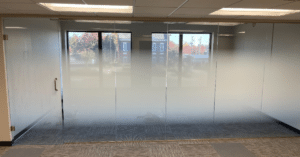
How window tinting protects office furniture, floors, and displays from UV damage comes down to one core mechanism: quality window film blocks up to 99% of ultraviolet radiation before it reaches your interior surfaces. Without that barrier, UV rays silently degrade hardwood floors, fade upholstery, and bleach the color out of printed displays within months, not years.
Who this is for: This article is written for office managers, facilities directors, and commercial property owners who are evaluating window film as a way to preserve interior assets and reduce replacement costs. Not for: Residential homeowners looking for home-decor advice or anyone seeking auto tinting options (though if you manage a fleet, you may want to discover auto window tinting separately).
Key Takeaways
- UV radiation is the primary driver of fading in flooring, furniture, and printed displays, and window film blocks the vast majority of it.
- High-quality commercial ceramic or nano-ceramic films reject up to 99% of UV rays without significantly darkening your office.
- Fading is cumulative and irreversible. Waiting until damage is visible means replacement costs are already locked in.
- Window tinting is not a total solution on its own. Visible light and heat also contribute to fading, and film selection matters for addressing all three.
- The return on investment case is strongest in south- and west-facing offices that receive direct afternoon sun for four or more hours daily.
- Film performance degrades over time. Most commercial films carry manufacturer warranties of 10 to 15 years, so plan for replacement cycles.
Why UV Rays Are the Biggest Threat to Office Interiors
Sunlight arrives in three forms: visible light, infrared (heat), and ultraviolet radiation. UV radiation, specifically UVA (315 to 400 nanometers) and UVB (280 to 315 nanometers), carries enough energy to break the chemical bonds in dyes, pigments, and organic materials. The result is fading, cracking, and brittleness in almost every category of office interior.
Hardwood and bamboo floors are particularly vulnerable. The lignin in wood responds to UV exposure by oxidizing, which causes yellowing in lighter woods and bleaching in darker ones. Carpeting loses dye vibrancy. Leather and fabric chairs begin to crack or fade at stress points first, then uniformly. Printed signage and retail displays, which often use dye-sublimation or inkjet processes, can show visible color shift in as little as 90 days of direct sun exposure if unprotected.
What usually trips people up here is the assumption that overcast days provide protection. UVA radiation penetrates standard glass and cloud cover with very little attenuation. A north-facing office in Seattle receives meaningful UV exposure year-round, even without direct sunlight. Standard float glass blocks almost all UVB but transmits a significant portion of UVA, which means your existing windows are not doing the protective work you might assume.
How Window Film Actually Blocks UV Radiation
Modern commercial window films use several technologies to intercept UV radiation. The most common are:
- Dyed polyester films: Absorb UV energy through the dye layer. Affordable, but the dye itself fades over time, reducing performance within five to seven years.
- Metalized films: Reflect UV and infrared using a thin metal coating. Durable and effective, but can interfere with Wi-Fi and cellular signals inside the building, which is a real operational trade-off in any data-intensive office.
- Ceramic and nano-ceramic films: Block UV and infrared through non-conductive ceramic particles. These are the current standard for commercial applications because they don’t interfere with electronics and maintain clarity over time. Brands like 3M, Eastman (LLumar), and Solar Gard all produce ceramic lines with independently verified UV rejection above 99%.
The key number to look for is Total Solar Energy Rejected (TSER) combined with UV rejection percentage. A film can have a 99% UV rejection rating but only 35% TSER, meaning heat and visible light still contribute to fading. For comprehensive interior protection, you want both figures to be high.
For a closer look at how film performs compared to traditional interior shading methods, the comparison of commercial window tinting vs blinds covers the practical differences in UV blockage, glare control, and light transmission.
According to the International Window Film Association, professionally installed window film can reduce UV transmission by 99% while maintaining visible light transmittance above 70%, depending on the product selected.
Film Performance Comparison by Type
| Film Type | UV Rejection | Signal Interference | Lifespan (Years) | Relative Cost |
|---|---|---|---|---|
| Dyed Polyester | Up to 90% | None | 5 to 7 | Low |
| Metalized | Up to 99% | Moderate to High | 10 to 15 | Medium |
| Ceramic | Up to 99% | None | 12 to 20 | Medium to High |
| Nano-Ceramic | Up to 99% | None | 15 to 20+ | High |
The catch with ceramic and nano-ceramic films is upfront cost. On large commercial glazing, you may pay $8 to $15 per square foot installed, compared to $3 to $6 for basic dyed films. Over a 15-year cycle, the ceramic option almost always wins on total cost of ownership when you factor in re-application frequency.
The Real Cost of UV Damage in an Office Setting
Replacing a commercial-grade hardwood floor in a 2,000-square-foot office runs anywhere from $12,000 to $30,000 depending on material and labor. Reupholstering a set of 20 executive chairs can easily reach $6,000 to $10,000. Reprinting and reinstalling branded wall graphics or display signage across a mid-size office typically runs $2,000 to $8,000 per installation cycle.
These are not hypothetical figures. They represent common line items in facilities maintenance budgets for businesses that delayed UV protection. The pattern seen repeatedly in commercial buildings is that the damage becomes undeniable around year three to five of occupancy, right when lease renewals and investor presentations make first impressions matter most.
Window film, by contrast, is a one-time capital expense with a multi-year protective lifespan. The energy savings case is separate but additive. A commercial window tinting reduce energy cost analysis shows that solar heat rejection from quality film can reduce HVAC load meaningfully, particularly in south- and west-facing offices in Sun Belt markets like Phoenix, Dallas, and Miami.
The U.S. Department of Energy notes that window treatments and films are among the most cost-effective interventions for reducing solar heat gain in existing commercial buildings, particularly where full window replacement is cost-prohibitive.
Selecting the Right Film for Your Office Space
Not every office has the same exposure profile. A glass-curtain-wall building in Houston facing southwest has very different requirements than a brick office in Boston with punched windows facing east. Film selection should account for four variables: orientation and hours of direct sun, glass type (single-pane, double-pane, or low-E), the materials most at risk, and any aesthetic or building-code constraints.
For commercial window tinting office buildings, the standard professional approach involves a site assessment that maps sun angles across seasons, identifies the highest-risk surfaces, and recommends film specifications by zone rather than applying one product throughout.
Low-E glass is worth mentioning specifically. Some window films are not compatible with existing low-E coatings because they can trap heat between layers and stress the glass seal, potentially voiding the window manufacturer’s warranty. Always confirm compatibility before installation.
UV Protection Needs by Interior Material
| Interior Material | Primary UV Risk | Secondary Risk | Recommended Film VLT |
|---|---|---|---|
| Hardwood Flooring | Lignin oxidation, bleaching | Surface cracking | 40% to 60% |
| Fabric Upholstery | Dye fading | Fiber weakening | 40% to 70% |
| Leather Furniture | Color bleaching | Surface cracking | 40% to 60% |
| Printed Displays/Graphics | Ink degradation | Color shift | 30% to 50% |
| Carpet | Dye fading | Pile compression | 50% to 70% |
VLT (Visible Light Transmittance) is the percentage of visible light the film allows through. Lower VLT means a darker appearance but generally higher solar energy rejection. For offices where natural light is a design priority or where employees require high illuminance for detailed work, a medium-VLT ceramic film (50% to 60%) typically balances protection with occupant comfort.
Installation, Maintenance, and What to Realistically Expect
Professional installation on commercial glazing typically takes one to three days for a mid-size office, depending on window count and access conditions. Most films require 30 to 60 days to fully cure, during which the adhesive bonds completely to the glass. During this window (literally), you may notice small water bubbles or haze. These resolve on their own. Cleaning the film before it cures can damage the adhesive, so the standard guidance is to leave it alone for the first month.
Maintenance after curing is minimal. Most ceramic and metalized films can be cleaned with standard non-ammonia glass cleaners and a soft cloth. Ammonia-based cleaners degrade the film’s adhesive layer over time.
In practice, the most common installation failure isn’t the film itself. It’s improper surface preparation. Glass that has mineral deposits, residue from prior film removal, or micro-scratches will show adhesion defects within 12 to 18 months. Verifying that your installer includes a thorough glass cleaning step before application is worth asking about explicitly.
Film performance also varies by installer quality as much as product quality. Specifying a 3M, LLumar, or Solar Gard authorized dealer and requesting the manufacturer’s warranty (not just the installer’s) protects you if delamination or color shift occurs before the stated lifespan.
If your business also operates vehicles as part of daily operations, the same principles of UV and heat management apply. Resources like the vehicle graphics guide and the vehicle wrapping guide cover exterior surface protection in mobile contexts, which can be relevant for branded fleet vehicles that sit in direct sun for extended periods.
The Mayo Clinic’s overview of UV radiation notes that UVA rays penetrate glass, which reinforces why passive window solutions like standard glazing are insufficient for long-term interior protection in commercial settings.
According to 3M’s commercial film documentation, ceramic window films in their Prestige series reject up to 99.9% of UV radiation while maintaining exterior appearance without significant darkening, making them a common specification for LEED-certified commercial renovations.
Understanding how window tinting protects office furniture, floors, and displays from UV damage is ultimately about treating your interior assets the same way you’d treat any depreciating capital investment: protect it proactively rather than absorb the replacement cost reactively. The technology is proven, the product options are well-differentiated, and the installation is minimally disruptive. The main variable is timing. Every month of unprotected sun exposure on a $15,000 hardwood floor or a set of branded displays is cumulative damage you cannot reverse.
Frequently Asked Questions
Q: Does window tinting completely stop furniture and floor fading?
Window tinting dramatically reduces fading but does not eliminate it entirely, because UV radiation is only one of three fading contributors.
Visible light and heat also degrade materials over time, and no film blocks 100% of all three simultaneously without turning your windows opaque. High-quality ceramic films handle UV best, typically above 99% rejection, but selecting a film with high Total Solar Energy Rejected (TSER) addresses the full picture. In practice, offices with quality film installed see fading rates slow by roughly 80% compared to unprotected glass, which extends the usable life of flooring and furniture significantly.
Q: How long does commercial window film last before it needs to be replaced?
Most commercial-grade ceramic and nano-ceramic films carry manufacturer warranties ranging from 10 to 15 years, with some premium products rated up to 20 years.
Dyed polyester films at the lower price point typically degrade noticeably within five to seven years, with UV rejection dropping as the dye layer breaks down. The first visible sign of film failure is usually a purplish color shift or bubbling at the edges. Replacing film before full failure is worth planning for in your facilities budget rather than waiting for visible deterioration, since degraded film provides significantly less UV protection during its decline.
Q: Will window tinting make my office too dark for employees to work comfortably?
Not if you select the right film. Ceramic films with a Visible Light Transmittance (VLT) of 50% to 70% provide strong UV and heat rejection while keeping the office bright enough for standard office tasks.
The common misconception is that effective UV protection requires a dark or reflective film. That was largely true of older dyed and metalized products, but nano-ceramic technology decouples UV and infrared rejection from visible light blockage. Employees in offices that use medium-VLT ceramic films typically report reduced glare and eye strain rather than a sense of dimness. If your office relies heavily on natural light for mood or circadian rhythm benefits, a 60% to 70% VLT film is usually the right starting point.
Q: Is window tinting worth it for a leased office space where I don’t own the building?
Yes, in most cases, because the cost of replacing faded flooring, furniture, and displays typically exceeds the cost of film installation several times over, regardless of who owns the building.
The trade-off is that you should confirm with your landlord whether film installation is permitted under your lease and whether the landlord requires removal upon vacancy. Many commercial landlords approve window film outright or even prefer it because it protects their asset. Some leases classify film as a tenant improvement, which may allow you to negotiate landlord contribution toward the cost. Get written approval before installation to avoid disputes at lease end.
Q: How does window tinting compare to UV-protective window treatments like solar shades or blinds?
Window film provides continuous, always-on UV protection without requiring occupant action, while solar shades and blinds depend on employees remembering to lower them and staying in position to block the right angle of light.
The practical gap is larger than it sounds. In a busy office, shades are routinely left open during peak sun hours, which is exactly when UV exposure is highest. Film works even when everyone forgets about it. The other distinction is that solar shades block the view, which defeats one of the primary reasons companies choose glass-heavy office designs. Film preserves sightlines while still rejecting the damaging spectrum of sunlight. For a full breakdown of performance differences across criteria, the comparison of commercial window tinting vs blinds covers glare control, UV blockage, and aesthetic trade-offs in detail.
The Bottom Line on How Window Tinting Protects Office Furniture, Floors, and Displays from UV Damage
How window tinting protects office furniture, floors, and displays from UV damage is not a complicated story once you understand the mechanism: the right film intercepts ultraviolet radiation before it reaches the surfaces that fade, crack, and discolor under prolonged exposure. The technology is mature, the product options are well-differentiated by performance tier and budget, and the installation process is minimally disruptive to daily operations. The honest caveat is that film is not a permanent, set-and-forget solution. It degrades over a 10 to 20 year cycle depending on product quality, and it works best as part of a broader interior asset protection strategy rather than a standalone fix.
The action step is straightforward. Commission a site assessment from an authorized installer (3M, LLumar, and Solar Gard all maintain dealer networks across the United States) that maps your office’s sun exposure by orientation and season, identifies your highest-risk surfaces, and recommends film specifications by zone. Bring your lease terms to that conversation if you rent. The assessment itself is typically free or low-cost, and it gives you the specific film-type recommendation and cost estimate you need to make a defensible capital expenditure case to your finance team or building owner.