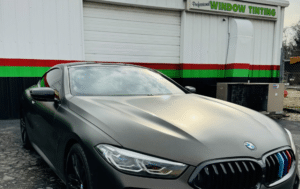

If you’re planning to tint your vehicle, the first question is simple: how dark is too dark? Alabama window tint laws are easier to follow than most drivers expect, and knowing them up front saves you a ticket and a costly redo.
Below, we walk through every window, the penalties, medical exemptions, costs, and how to pick a tint you won’t regret.
Alabama Window Tint Laws: The Legal Limits for Every Window
Your front side windows must let in at least 32% of visible light. On a sedan, the back side windows and rear window follow the same 32% rule. On an SUV or van, the windows behind the driver can go darker.
Here are the limits for passenger vehicles registered in Alabama, based on ALEA’s official tinting regulations:
| Window | Sedans and station wagons | SUVs, vans and other multi-purpose vehicles |
|---|---|---|
| Windshield | Transparent tint on the top 6 inches only | Transparent tint on the top 6 inches only |
| Front side windows | At least 32% light let in | At least 32% light let in |
| Back side windows | At least 32% light let in | Darker tint allowed |
| Rear window | At least 32% light let in | Darker tint allowed |
| Reflectivity | No more than 20% | No more than 20% |
ALEA notes a 3% tolerance on the 32% limit. It also says the vehicle manufacturer decides which category your vehicle falls into.
Quick reminder: the law is about how much light passes through the glass, not the color of the film. That number is called VLT, or visible light transmission.
What Does 32% Tint Actually Look Like?
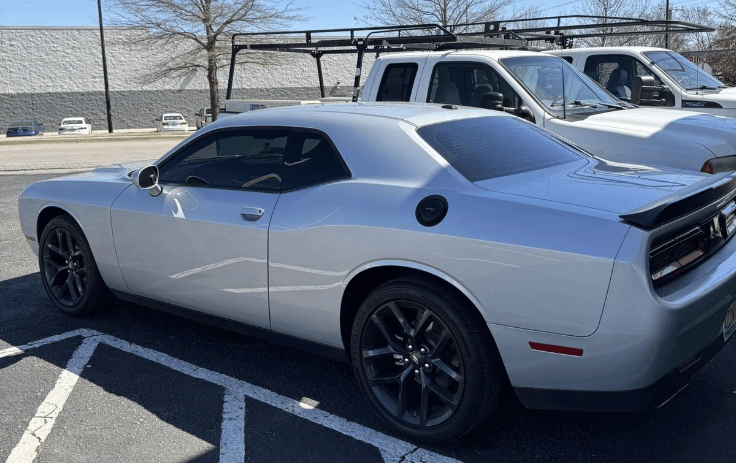
VLT is the percentage of visible light that gets through your window. A higher number means a lighter tint.
The International Window Film Association (IWFA) explains that a 70% VLT film is nearly clear, while a 15% film looks almost black from the outside. At 32%, you get a noticeable, clean look while still seeing well at night.
Your factory glass counts too
Most glass already blocks a little light before any film goes on. When you add film, the two layers work together, so the final reading is lower than the film’s rating alone.
That’s why a good installer measures the finished window with a meter. If you’re close to the limit, ask for that reading before you pay.
How officers check tint
Alabama law says light transmission must be measured with a proper meter. It also says the officer must have that meter before stopping the driver. So a ticket should be based on a measurement, not a guess.
Rules for Sedans vs. SUVs, Vans and Trucks
Alabama splits vehicles into two groups. Knowing which one you drive tells you how dark you can go.
Sedans, coupes and station wagons
Every side window and the rear window must allow at least 32% of light through. There’s no separate “darker in the back” allowance.
SUVs, vans and other multi-purpose vehicles
The front windshield and front side windows follow the same rules as a sedan. Behind the driver, ALEA says darker tint is allowed as permitted by the manufacturer and federal law.
There’s one catch: you need outside rearview mirrors on both sides when you go darker in the back. Since the manufacturer sets your vehicle’s category, check your registration or ask your installer if you’re unsure about a truck or crossover.
Windshield Tint Rules
You can’t tint the whole windshield. Alabama law bans film that reduces light through the front windshield, with a few exceptions.
The main one: a transparent strip on the uppermost six inches of the windshield is allowed, as long as it isn’t red or amber. ALEA’s guidance matches: only the upper six inches may be tinted, and the film must be transparent.
If you want UV protection across the whole windshield, ask about clear film. We cover that in the benefits section below.
Reflective and Mirror-Style Tint
Some films have a metallic or mirror look. In Alabama, window film can’t reflect more than 20% of light.
If a film looks like a mirror from the outside, ask your installer to confirm it meets the 20% limit before it goes on your car.
The Compliance Sticker
Alabama requires a label showing your tint meets the law. Under Section 32-5C-6, a vehicle with film on its windows must display a label visible from the outside.
The same law says no one may install material that pushes the windows past the legal limits. That’s a good reason to hire a professional shop that knows the rules.
Medical Exemptions for Darker Tint
If a medical condition requires you to be shielded from direct sunlight, Alabama has a process for it. ALEA may issue an exemption for vehicles you own or regularly ride in.
Here’s what to expect:
- Apply through ALEA. ALEA lists its Driver License Division, Medical Records Unit, as the contact on its tinting regulations page.
- Get a physician’s statement. It must come from a physician licensed to practice medicine in Alabama.
- Display the decal. If approved, ALEA issues a decal with a unique ID number. It goes on the windshield of every vehicle you drive.
ALEA can attach conditions or limits to an exemption, so install only what your approval allows.
Who Doesn’t Have to Follow the Limits?
The law lists a few exceptions. The most common ones are:
- Factory tint. Vehicles with glass tinted before delivery, or as permitted by federal law, are exempt under Section 32-5C-3.
- Out-of-state vehicles. The rules don’t apply to vehicles not registered in Alabama. If you move here and register your car, expect to follow Alabama’s limits.
- Certain law enforcement vehicles. Active or retired officers’ personal vehicles may be exempt if they carry law enforcement ID.
Penalties for Illegal Tint in Alabama
A tint violation is a misdemeanor. Under Section 32-5C-7, the penalties grow with repeat offenses within a year:
- First conviction: a fine of up to $100, up to 10 days in jail, or both.
- Second conviction: a fine of up to $200, up to 30 days in jail, or both.
- Third or later conviction: a fine of up to $500, up to three months in jail, or both.
The IWFA also notes that illegal film may have to be removed in some states. Paying for tint twice is usually the bigger headache than the fine.
Why Legal Tint Is Still Worth It
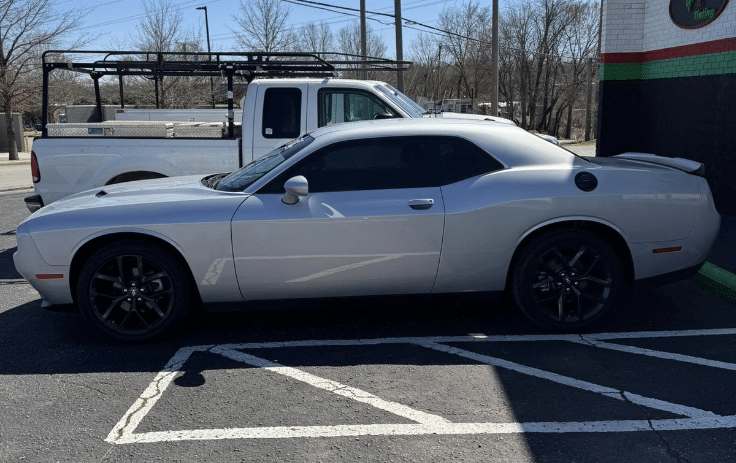
Staying within the law doesn’t mean giving up the benefits. Here’s what quality film can do:
- Block UV rays. The Skin Cancer Foundation says most side and rear car windows block UVB but let much of the UVA through. UV-blocking film can stop up to 99% of UV light.
- Cut heat and glare. The IWFA says quality film reduces heat buildup and glare, which means less eye strain and a cooler cabin. That matters in an Alabama summer.
- Protect your interior. Film helps slow fading and cracking of seats and the dash.
- Add safety. Film helps hold glass together on impact, which reduces flying fragments.
- Add privacy. Darker film makes it harder to see into your vehicle.
Good to know: the Skin Cancer Foundation also says darker tint doesn’t block UV any better than clear UV film. If sun protection is your main goal, you don’t need to go dark.
Which Type of Tint Should You Choose?
Film type affects heat control, durability and price more than darkness does. For a deeper comparison, our complete guide to choosing auto tint, costs and installers covers the details.
At Designers Graphics, we install Llumar FormulaOne film in three tiers:
- Classic: a dyed film. It’s the budget-friendly way to get a darker look.
- Pinnacle: a single-layer ceramic film. It’s our most popular choice.
- Stratos: a double-layer nano ceramic film. It’s our top performer for heat control.
Ceramic films use ceramic particles instead of metal. That’s why they don’t interfere with GPS, Bluetooth, keyless entry or cell signal. You can see all three on our auto window tinting page.
How Much Does Window Tint Cost?
Price depends on three things, according to the IWFA: the quality and type of film, your vehicle model, and how much glass needs covering.
For most SUVs and trucks, our pricing for the two front doors starts at $99. A full vehicle costs more and varies by film. The fastest way to know your exact price is to request a free quote.
How Long Does Installation Take?
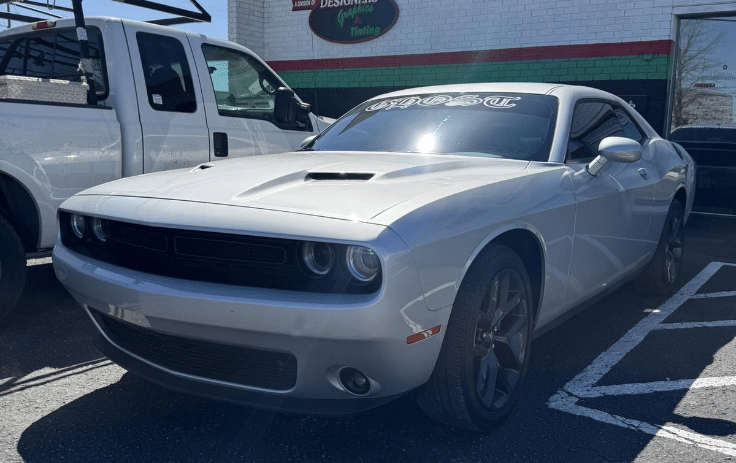
The IWFA says professional installation takes a few hours. Installers clean the glass, float the film into place with a water solution, then squeegee out the water and bubbles.
Full curing takes longer. It depends on film thickness, coatings, climate and how the vehicle is stored.
Our advice: keep the windows up for 2 to 3 days after install. In cold or humid weather, give it longer.
How to Care for Your Tint
A little care keeps film clear for years.
- Wait to clean. Film manufacturer Madico says to avoid cleaning until the film has cured. Ask your installer how long to wait for your film.
- Use gentle cleaners. We recommend ammonia-free glass cleaner and a soft microfiber towel.
- Skip sharp tools. Don’t scrape the inside of the glass.
- Check your warranty. Our automotive films carry a lifetime warranty, so ask what’s covered.
Risks of Going Too Dark or Doing It Yourself
Pushing past the limit is the obvious risk. But a few others catch drivers off guard:
- Tickets and removal costs if your windows measure below the legal limit.
- Poor night visibility, especially on dark country roads.
- Missing labels, since Alabama requires a compliance label.
- Bubbles, creases and dust from DIY installs.
A professional install avoids most of this. A shop also knows your vehicle’s glass, so the final reading lands where it should.
Frequently Asked Questions
Is 5% limo tint legal in Alabama?
Not on the front side windows of any vehicle, or on the back of a sedan. On SUVs and vans, darker tint is allowed behind the driver, with mirrors on both sides.
Can I tint my whole windshield?
No. Only the top six inches may have transparent tint. Clear UV film is a better choice if you want more sun protection.
What if my car came with factory tint?
Factory-tinted glass is exempt. Film added on top can lower the total reading, so have it measured first.
Do I need a sticker on my tinted windows?
Yes. Alabama requires a visible compliance label on vehicles with film on the glass.
Can I get a medical exemption?
Yes, through ALEA, with a statement from an Alabama-licensed physician. See the medical exemptions section above.
Do Alabama’s rules apply if my car is registered in another state?
The law doesn’t apply to vehicles not registered in Alabama. Once you register here, it does.
Get Legal Tint From a Shop That Knows the Rules
Alabama window tint laws aren’t complicated, but the details matter: the right percentage, the right windows and the right label. We install film with these rules in mind every day, and we’ll tell you honestly what works for your vehicle.
Request a free, no-obligation quote, or stop by one of our Shoals locations:
- Sheffield: 1501 Broadway St, Sheffield, AL 35660, (256) 383-5217
- Florence: 625 Thompson St, Florence, AL 35630, (256) 766-4488
Hours are Monday through Friday, 8:00 am to 5:00 pm. Saturday is by appointment only.